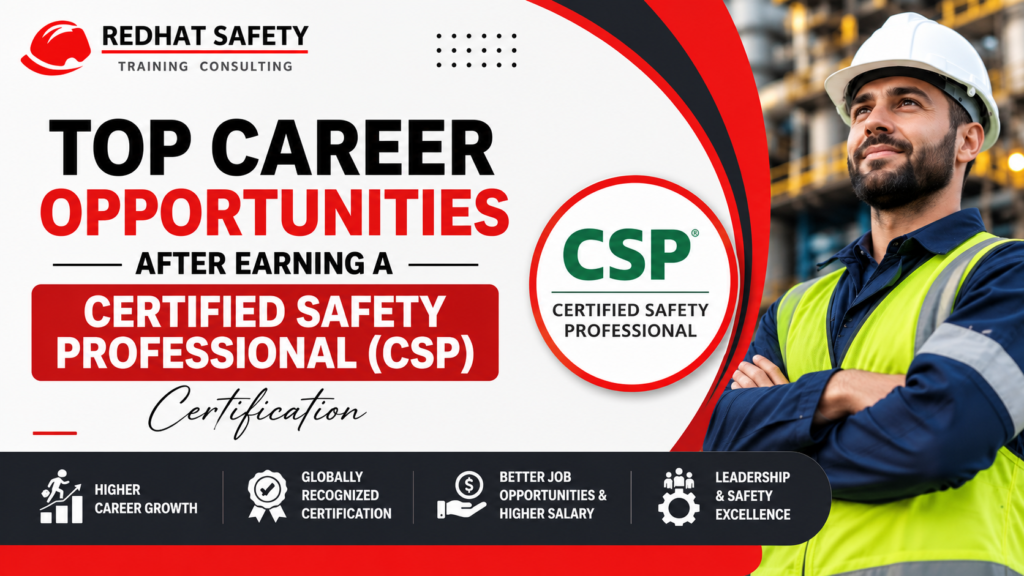
Top Career Opportunities After Earning a Certified Safety Professional (CSP) Certification
The demand for highly qualified Health and Safety professionals continues to grow across industries worldwide. As organizations strengthen their commitment to workplace safety, risk management, and regulatory compliance, employers are increasingly looking for professionals with advanced knowledge and internationally recognized credentials.
One of the most respected credentials in the Occupational Health and Safety profession is the Certified Safety Professional (CSP) certification. Recognized globally, the CSP credential demonstrates advanced competency in managing workplace risks, improving safety performance, and leading Health and Safety initiatives.
For professionals planning to achieve this milestone, CSP preparation plays an important role in building the knowledge and confidence needed for the certification journey.
In this guide, we’ll explore the career opportunities available after earning the CSP credential, the industries that value certified professionals, and how effective preparation can support your professional growth.
What Is the Certified Safety Professional (CSP)?
The Certified Safety Professional (CSP) credential is awarded by the Board of Certified Safety Professionals (BCSP) to qualified professionals who meet the published eligibility requirements and successfully pass the CSP examination.
The certification is widely respected by employers because it demonstrates expertise in:
- Occupational Health and Safety Management
- Risk Assessment
- Hazard Identification
- Incident Investigation
- Safety Leadership
- Fire Prevention
- Industrial Hygiene
- Environmental Health and Safety
- Regulatory Compliance
Holding the CSP credential reflects a commitment to professional excellence and continuous learning.
Why Employers Prefer Certified Safety Professionals?
Today’s organizations need more than compliance—they need leaders who can proactively manage workplace risks and build a strong safety culture.
Professionals with the CSP credential are often recognized for their ability to:
- Develop effective safety management systems
- Reduce workplace incidents
- Improve organizational safety performance
- Lead safety teams
- Manage regulatory compliance
- Conduct complex risk assessments
- Drive continuous improvement
Because of these capabilities, many employers consider the CSP credential a valuable qualification when recruiting for senior Health and Safety roles.
Top Career Opportunities After Earning the CSP Credential
1. Health and Safety Manager
Health and Safety Managers develop and implement organizational safety strategies, oversee compliance, and lead workplace improvement initiatives.
They often supervise safety teams and collaborate with senior management to reduce operational risks.
2. HSE Manager
HSE Managers oversee Health, Safety, and Environmental programs across construction, manufacturing, oil and gas, and infrastructure projects.
The CSP credential can strengthen a professional’s profile for these leadership positions.
3. Safety Consultant
Many experienced CSP professionals work as independent consultants or with consulting firms.
Consultants help organizations improve workplace safety, conduct audits, investigate incidents, and develop safety management systems.
4. Corporate Safety Manager
Large multinational companies often employ Corporate Safety Managers to standardize safety practices across multiple sites.
These professionals develop company-wide safety policies, monitor performance, and promote continuous improvement.
5. Risk Manager
Risk Managers identify operational hazards, assess organizational risks, and recommend effective control measures.
Professionals with strong analytical skills and advanced safety knowledge are highly valued in these roles.
6. Compliance Manager
Compliance Managers ensure organizations meet occupational health and safety regulations, internal policies, and industry standards.
The CSP credential demonstrates the competency needed to manage compliance responsibilities effectively.
7. Occupational Health and Safety Advisor
Safety Advisors provide technical guidance to employers, support workplace inspections, conduct risk assessments, and assist with incident investigations.
This role is common across construction, manufacturing, logistics, and industrial operations.
8. HSE Auditor
Auditors evaluate organizational safety management systems, identify improvement opportunities, and verify compliance with applicable standards.
Professionals with advanced safety knowledge are well suited for auditing responsibilities.
9. Safety Trainer
Many CSP-certified professionals choose to share their expertise by delivering Health and Safety training programmes.
Training roles may involve classroom instruction, workplace coaching, and competency development.
10. Director of Health and Safety
With significant industry experience, many CSP professionals progress into executive leadership positions responsible for developing organizational Health and Safety strategies.
These roles involve policy development, governance, strategic planning, and organizational risk management.
Industries Hiring Certified Safety Professionals
The CSP credential is valued across many sectors, including:
- Construction
- Oil and Gas
- Manufacturing
- Petrochemical
- Renewable Energy
- Utilities
- Logistics
- Aviation
- Marine and Offshore
- Mining
- Infrastructure
- Healthcare
These industries continue to invest in experienced Health and Safety professionals who can improve workplace performance and support sustainable business growth.
Why CSP Preparation Matters?
Preparing for the CSP examination involves more than studying technical concepts.
A structured CSP preparation programme helps professionals:
- Review key Health and Safety principles
- Understand examination topics
- Strengthen problem-solving skills
- Build confidence for the examination
- Identify knowledge gaps
- Develop effective study strategies
Choosing the right preparation programme can help professionals organize their learning and approach the certification process with greater confidence.
How the CSP Credential Supports Long-Term Career Growth
Earning the Certified Safety Professional (CSP) credential is more than adding a professional certification to your résumé. It demonstrates your commitment to continuous learning and your ability to manage workplace health and safety at a professional level.
As industries adopt stricter safety standards and more advanced risk management practices, employers increasingly seek professionals who can lead safety initiatives, improve compliance, and contribute to organizational success.
Many professionals find that the CSP credential helps them become stronger candidates for leadership roles, consulting opportunities, and international career pathways.
Global Demand for Certified Safety Professionals
Health and Safety professionals are needed across a wide range of industries worldwide. Organizations continue to invest in workplace safety to reduce risks, protect employees, and improve operational performance.
Professionals holding the CSP credential may find opportunities in regions such as:
- Middle East (UAE, Saudi Arabia, Qatar, Oman, Kuwait)
- North America
- Europe
- Asia-Pacific
- Africa
Actual job opportunities depend on an individual’s qualifications, experience, industry, local regulations, and employer requirements.
Skills Employers Value in CSP Professionals
While technical knowledge is important, employers also look for professionals who can lead teams, communicate effectively, and make informed decisions.
Some of the most valued skills include:
- Safety leadership
- Strategic planning
- Risk assessment
- Incident investigation
- Root cause analysis
- Regulatory compliance
- Emergency preparedness
- Safety management systems
- Communication and training
- Problem-solving
Developing these competencies alongside your CSP preparation can strengthen your professional profile.
Why Invest in a CSP Preparation Course?
Preparing for the CSP examination requires a structured approach. A well-designed CSP preparation course can help you:
- Understand the examination domains and key concepts.
- Refresh your knowledge of occupational health and safety principles.
- Practice applying concepts to workplace scenarios.
- Improve confidence through guided learning.
- Create an effective study schedule.
- Stay motivated throughout your preparation.
A preparation course does not replace the official BCSP eligibility requirements, but it can be a valuable resource for organizing your study and reinforcing your understanding of the subject matter.
How to Choose the Right CSP Preparation Course
Before enrolling, consider the following:
Experienced Trainers
Choose a provider with instructors who have practical experience in Occupational Health and Safety.
Structured Learning Materials
Look for comprehensive study resources that cover the examination topics in a logical sequence.
Flexible Learning Options
Online and blended learning can help working professionals balance study with their career commitments.
Practice Questions
Access to realistic practice questions and revision exercises can help reinforce your learning.
Learner Support
Select a provider that offers academic guidance, mentoring, and timely responses to learner queries.
Common Mistakes to Avoid During CSP Preparation
Many candidates delay their progress by making avoidable mistakes, including:
- Beginning preparation without understanding the published eligibility requirements.
- Relying only on memorization instead of understanding key concepts.
- Leaving revision until the final weeks.
- Ignoring weaker subject areas.
- Failing to follow a consistent study plan.
Creating a realistic preparation schedule and reviewing topics regularly can improve your readiness for the examination.
Why Choose Redhat Safety for CSP Preparation?
At Redhat Safety, we understand the challenges faced by working professionals preparing for advanced Health and Safety certifications.
Our CSP preparation programme is designed to help learners build a strong understanding of key Occupational Health and Safety concepts through structured learning, experienced trainers, and practical guidance.
Whether you are planning to expand your professional knowledge or preparing for the CSP examination, our team is committed to supporting your learning journey.