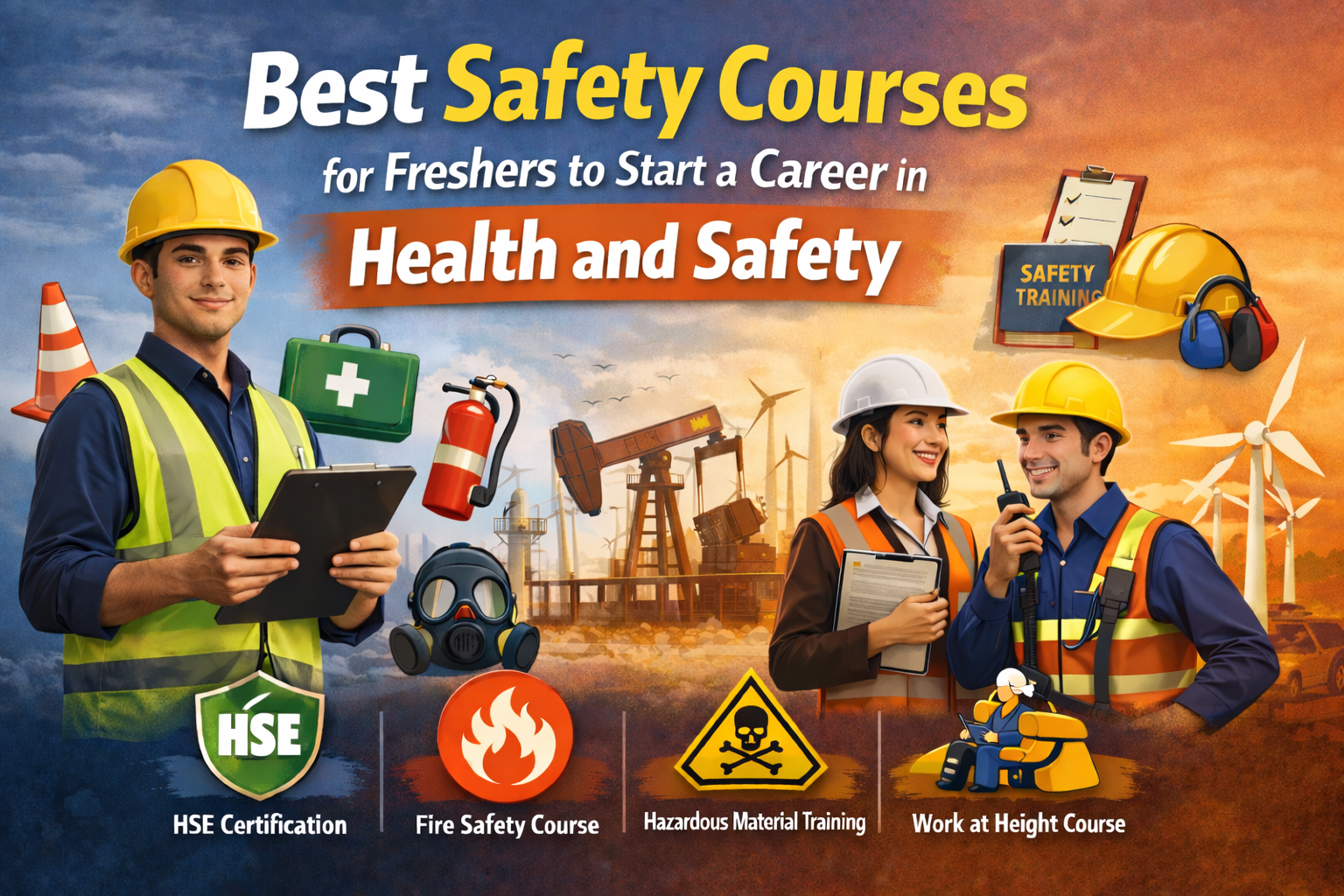
Starting a career in Health and Safety as a fresher is one of the smartest long-term career decisions today — but only if you start with the right safety course.
Every year, thousands of fresh graduates and school leavers enter the Health & Safety field with high expectations. Unfortunately, many of them lose valuable time and money by enrolling in best safety courses for freshers that are:
- Too advanced for beginners
- Not aligned with entry-level job roles
- Selected based on popularity or hype rather than career logic
At Redhat Safety, this pattern appears repeatedly.
Freshers do not struggle because Health & Safety lacks opportunities. They struggle because they begin at the wrong level.
This guide explains:
- Which safety courses are best for freshers
- What freshers should avoid at the beginning
- How to build a strong foundation for long-term career growth in Health & Safety
Why Freshers Must Choose Safety Courses Differently
Freshers are assessed very differently from experienced professionals.
When employers hire freshers for Health & Safety roles, they do not expect expertise. Instead, employers typically look for:
- A basic understanding of workplace hazards
- Awareness of safety rules, procedures, and PPE
- Ability to follow safety systems and instructions
- Willingness to learn and adapt on site
What employers do not expect from freshers:
- Advanced safety management knowledge
- Complex international compliance frameworks
- Auditing or leadership-level expertise
This is why freshers should never start with advanced or management-level safety programs.
Those qualifications are designed for professionals who already understand site operations and safety fundamentals.
What Freshers Actually Need From a Safety Course
Before enrolling in any safety course, freshers should evaluate whether the program provides the essentials required for entry-level employability.
A good beginner safety course should offer:
- Clear explanations of safety fundamentals
- Practical examples of real workplace hazards
- Introduction to basic safety laws and compliance concepts
- Understanding of site-level safety documentation
- Preparation for entry-level safety roles
Courses that focus only on issuing certificates, without building practical understanding, often leave freshers unprepared for interviews and site work.
Safety Diploma Programs – The Best Starting Point for Freshers
For most beginners, safety diploma programs are the most effective and reliable way to start a career in Health & Safety.
Safety diplomas are structured specifically for learners with little or no prior experience. They introduce core safety principles in a logical and progressive manner, making them ideal for freshers entering factories, construction sites, and industrial environments.
One of the most commonly chosen starting programs is the Industrial Safety Diploma, which covers workplace hazards, accident prevention, safety procedures, and basic compliance requirements.
These diploma programs balance theory with practical understanding and are widely accepted by employers across India.
Why Safety Diplomas Are Ideal for Freshers
Safety diploma programs:
- Are designed specifically for beginners
- Build safety fundamentals step by step
- Improve interview readiness
- Prepare learners for real site environments
- Allow smooth progression to advanced or international safety courses later
At Redhat Safety, diploma-level programs are recommended because they help freshers gain confidence before moving into more complex safety roles.
Foundation Safety Officer Courses for Entry-Level Roles
Another strong option for freshers is foundation-level Safety Officer courses.
These programs focus on:
- Hazard identification
- Basic risk control methods
- Toolbox talks and safety inductions
- Entry-level compliance awareness
They are well suited for freshers aiming to start as:
- Safety Assistant
- Junior Safety Officer
- HSE Trainee
Such courses help freshers understand site-level safety responsibilities and work effectively under senior safety professionals.
Fire and Safety Courses for Entry Awareness
Freshers who have completed Class 10 or Class 12 and want to enter safety-related roles can begin with Fire and Safety courses.
These courses provide awareness of:
- Fire prevention techniques
- Emergency response procedures
- Basic site safety practices
Fire and Safety courses are commonly used as an entry point into safety support roles and can later be upgraded to industrial safety diplomas.
General Safety Certificate Courses – Are They Enough for Freshers?
General safety certificate courses can be useful — but only in limited situations.
When Safety Certificates Make Sense
- When you want basic safety awareness before committing to a diploma
- When your current job requires safety knowledge
- When you are exploring Health & Safety as a career option
When Safety Certificates Are Not Enough
- If your goal is a Safety Officer or HSE role
- If you want strong employability as a fresher
For most freshers, certificates alone do not meet employer expectations. Structured diploma or foundation-level programs are usually required.
Safety Courses Freshers Should Avoid at the Beginning
One of the most common mistakes freshers make is enrolling in advanced safety programs too early.
Freshers should avoid starting with:
- Advanced safety management programs
- Auditor or lead auditor courses
- Complex international safety frameworks
- Leadership-focused safety qualifications
These programs are valuable after gaining site exposure, not before.
For example, international general certificates are more effective as a career upgrade later.
Starting too advanced often leads to confusion, low confidence, and poor job outcomes.
Entry-Level Health and Safety Jobs After Beginner Safety Courses
After completing the right beginner-level safety course, freshers can realistically target roles such as:
- Safety Assistant
- Junior Safety Officer
- HSE Trainee
- Site Safety Support Staff
These roles focus on:
- Learning site practices
- Supporting senior safety professionals
- Understanding real-world hazards
- Building hands-on experience
This early phase is critical for long-term growth in Health & Safety.
How Freshers Should Plan Their Safety Career After the First Course
Your first safety course is only the starting point, not the final destination.
A realistic and proven career progression looks like this:
- Complete a foundational safety diploma or entry-level course
- Enter an entry-level safety role
- Gain site exposure and practical confidence
- Upgrade to advanced or international safety qualifications
- Progress into Safety Officer, HSE Officer, and senior roles
For freshers targeting overseas opportunities later, international diplomas such as ESC IDHSE become relevant after building a strong foundation.
Online Safety Courses – Are They Suitable for Freshers?
Yes. Structured and recognised online safety courses can be suitable for freshers when they:
- Clearly explain safety fundamentals
- Include practical workplace examples
- Prepare learners for entry-level roles
Freshers who prefer flexible learning options can explore available online safety course programs.
Common Mistakes Freshers Make When Choosing Safety Courses
Freshers should avoid:
- Choosing courses based only on popularity or branding
- Jumping into advanced programs without fundamentals
- Taking multiple short courses without a career plan
- Expecting instant job placement
- Ignoring long-term upgrade pathways
Health & Safety careers reward planning, patience, and consistency — not shortcuts.
Final Advice on Best Safety Courses for Freshers Starting a Career in Health and Safety
If you are a fresher, remember this:
Your first safety course should make you employable — not overwhelmed.
Choose a course that:
- Matches your beginner level
- Prepares you for entry-level safety roles
- Allows future growth and upgrades
Starting right saves years of correction later.
Not Sure Which Safety Course Is Right for You as a Fresher?
At Redhat Safety, freshers receive career-aligned guidance based on education background, job-market demand, and long-term growth — not guesswork.
Frequently Asked Questions (FAQs) on Safety Courses for Freshers
Which safety course is best for freshers?
Safety diploma programs and foundation Safety Officer courses are the best options for freshers. They focus on core safety fundamentals, practical understanding, and entry-level job readiness.
Can freshers start a career in Health and Safety without experience?
Yes. Freshers can start by completing a recognised beginner safety course and applying for entry-level roles such as Safety Assistant or Junior Safety Officer.
Are safety diploma courses better than short certificates?
Yes. Safety diplomas provide structured learning and better employer acceptance compared to short certificate courses, which usually offer only basic awareness.
Should freshers choose international safety courses first?
No. International and advanced safety courses are more effective after gaining site exposure. Freshers should start with foundational programs first.
Are online safety courses suitable for freshers?
Yes. Structured and recognised online safety courses are suitable for freshers when they clearly explain fundamentals and prepare learners for entry-level roles.
How long does it take for freshers to get a safety job?
With the right foundational course and basic site exposure, many freshers secure entry-level safety roles within a few months.
What job roles can freshers expect after a safety course?
Freshers typically start as Safety Assistants, Junior Safety Officers, HSE Trainees, or Site Safety Support staff.
Is one safety course enough to start a career?
Yes. One well-chosen foundational safety course is enough to start. Career growth comes through experience and progressive upgrades.
What should freshers avoid when choosing safety courses?
Freshers should avoid advanced programs, multiple random certificates, and courses that promise instant jobs without building fundamentals.
How can Redhat Safety help freshers?
Redhat Safety provides career-aligned guidance, structured safety courses, and step-by-step learning pathways to help freshers enter and grow in Health & Safety confidently.